

Chiropractic services are popular in the United States. Millions of people visit chiropractor doctors every year to get help with neuromusculoskeletal conditions. These professionals can provide relief from discomfort while also helping address the underlying cause of stiffness and pain.
If you’re struggling with neuromusculoskeletal conditions, you may be considering visiting a chiropractic physician. However, there’s a lot of information regarding chiropractors that could keep you from getting the assistance you need.
Learn more about what these providers do, how to choose one, and when it’s time to schedule a visit.
What Is a Chiropractor Doctor?
A chiropractor is a licensed healthcare professional whose goal is to assist your body in healing itself. To accomplish this, they rely on non-invasive treatments.
Chiropractic doctors focus on your neuromusculoskeletal system. Your muscles, tendons, ligaments, nerves, and bones make up this system.
Chiropractors are Doctors of Chiropractic (DC). To earn these credentials, they must obtain an undergraduate degree and complete a Council in Chiropractic Education-accredited DC program. It’s typically a four-year program and offers training in anatomy, radiology, physiology, biochemistry, and spinal adjustment techniques.
Once they complete the program, they must obtain at least 1,000 hours of supervised clinical training. They then need to pass the National Board of Chiropractic Examiners exams. All states require them. A potential chiropractic doctor must take parts I, II, and III, and they have the option of also taking the Physiotherapy Exam.
They will then take the Part IV National Practice Exam. In this exam, they’ll be asked to perform assessments similar to what they’d see in their practice.
The next step will be to obtain state licensure. The process varies for each state. It can include background checks and specialized exams. To maintain their license, chiropractors must get continuing education credits every year. Make sure you know the exact requirements in your state for these professionals.
DC vs. MD
Doctors of Medicine (MDs) diagnose and treat conditions using surgery and other invasive procedures, as well as pharmaceuticals. They tend to have more hours of training in physiology as well.
In contrast, DCs emphasize hands-on, non-invasive treatments like spinal manipulations. They work mainly on the musculoskeletal system and not on the whole body, as MDs do.
A common concern that people have when considering whether to visit a chiropractor is whether they are real doctors. They are doctors because they have earned a Doctor of Chiropractic degree. They are not, however, medical or osteopathic doctors.
What Conditions Chiropractic Doctors Treat
A chiropractor can address a number of conditions. Some of the most common include:
- Back and Neck Pain: Acute or chronic pain and stiffness, as well as whiplash and other injuries
- Sciatica Pain: Pain of the sciatic nerve that radiates down the leg
- Headaches and Migraines: Cervicogenic and tension headaches
- Arthritis and Tendonitis: Joint inflammation and pain
- Joint Dysfunction: Conditions that impact ankles, hips, knees, and shoulders
- Muscular Conditions: Tension, sprains, and strains
- Sports Injuries: All manner of musculoskeletal injuries, as well as performance improvement procedures
- Scoliosis: Spinal curvature
- Carpal Tunnel Syndrome: Hand and wrist pain
- Other Conditions: Vertigo, stress-related tension, digestive issues
Chiropractic care can help improve mobility, enhance nervous system function, and address pain.
What to Expect at a Chiropractic Visit
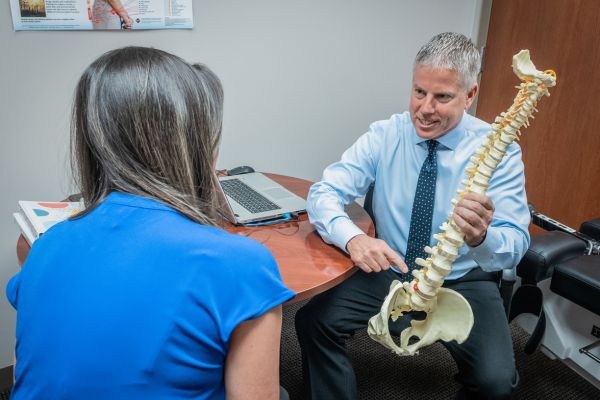
If it’s your first time at a chiropractor doctor’s office, the process will begin with a check-in. You’ll offer all of your medical history and explain what you’re struggling with. Your provider will then conduct a full physical examination. This can include a posture analysis and an assessment of your range of motion.
Additionally, you may have to receive orthopedic and neurological tests to check for muscle and joint function. For specific injuries, it may be necessary to get X-rays, too.
With all of this information, your provider will offer a diagnosis. They can then plan treatments and establish the goals that the treatment will help meet. In some instances, you may receive an initial, gentle adjustment to reduce pain and provide symptom relief. This will occur during your initial evaluation.
Your chiropractic doctor may recommend numerous sessions at the start of your treatment. Gradually, these sessions can be reduced or offered over an extended period of time. The chiropractor may also offer advice on your posture and provide massage therapy or electrical muscle stimulation.
To prepare for your first session, gather any records you may have. If you have X-rays or MRI results, your chiropractor will need to see them to get a clear view of the problem. It’s also a good idea to wear comfortable clothing. Loose-fitting clothing is the best because it allows you to move easily.
Benefits and Risks of Chiropractic Care
Chiropractic care offers many benefits. It can help address the underlying cause of what you’re experiencing instead of only focusing on managing symptoms. It’s a drug-free treatment option and is non-invasive.
Additionally, getting regular chiropractic care can help prevent injuries. It can do so by improving your spinal alignment and addressing posture issues before they cause pain.
Chiropractic care is safe when you have the right provider. You can still experience some side effects from receiving these treatments, however. You may feel some soreness or headaches. Some people experience fatigue. Serious adverse effects are rare but can include pinched nerves and herniated discs.
When to See a Chiropractor vs. Another Provider
Deciding when to get chiropractic care instead of going to another provider requires assessing your symptoms and your goals. If you are dealing with mild to moderate discomfort, a chiropractor could be the right option. The same is true if you’re looking for conservative treatments that won’t require surgery or medications.
Chiropractic care is a great option for those who have been through surgery or other invasive treatments and want to heal rapidly. Chiropractic services help reduce inflammation, which allows better blood flow and boosts the healing process.
If you’re experiencing severe pain or are dealing with numbness or weakness in your arms and legs, you may need another provider. You may also need further treatments from other professionals if you don’t see much improvement with chiropractic care.
How to Choose a Chiropractor
One of the first steps to take when choosing a chiropractic doctor is to check their qualifications and experience. Verify the chiropractor’s license and ensure they’re not involved in any disciplinary actions.
You must also check that they have experience managing similar issues to the ones you face. A chiropractor who hasn’t treated many patients with sports injuries may not be appropriate if that’s what you’re dealing with.
Seek referrals. Ask friends and family members or speak with other healthcare providers to see if they recommend any specific chiropractor.
Once you’ve narrowed your options to two or three chiropractors, you can speak with them about their approach to treatment. You need help from someone who offers evidence-based care. The right person will not make claims about being able to cure conditions in one or two sessions.
During your initial consultation, ask questions to get a good sense of their communication style. You should feel comfortable with your chiropractor.
It’s helpful to read reviews. There are many sites where you can find honest evaluations of their services. Take the time to also consider costs. Popular chiropractic practices will likely charge more. Ask about insurance and what kind of payment options the clinic offers as well.
FAQs
If you’re struggling with discomfort or stiffness anywhere in your musculoskeletal system, you may need a chiropractor. Get answers to common questions about what this visit can involve.
What Is the Difference Between Chiropractic Care and Physiotherapy?
Chiropractic care relies on spinal manipulation techniques to offer relief from pain and stiffness. Physiotherapy combines strengthening exercises, manual therapy, and electrotherapy to heal injuries.
Can Chiropractic Care Help Treat ALS?
A person with amyotrophic lateral sclerosis (ALS) can benefit from chiropractic care. It can help reduce pain and improve joint mobility while also managing symptoms like stiffness and spasms. It is not a cure for the condition, however.
How Much Does a Chiropractic Session Cost?
A chiropractic session can vary in cost. You can expect the more popular practices to charge more for their services. Other considerations are the severity of the condition you have and the complexity of the necessary treatments. The location will have an impact, too. Chiropractors in large cities can charge more.
Trust Algonquin Chiropractic Center
If you’re dealing with pain, stiffness, and loss of range of motion, it may be time to see a chiropractor. At Algonquin Chiropractic Center, we provide a variety of treatment options to assist you. Our team has decades of experience and understands the intricacies of addressing even the most complex injuries.
With guidance, you can start getting relief from your symptoms. Contact us at Algonquin Chiropractic Center to schedule a visit with our chiropractor doctor.